|
|
|
|
INTERNATIONAL HELMET SAFETY CERTIFICATIONS |
 |
|
|
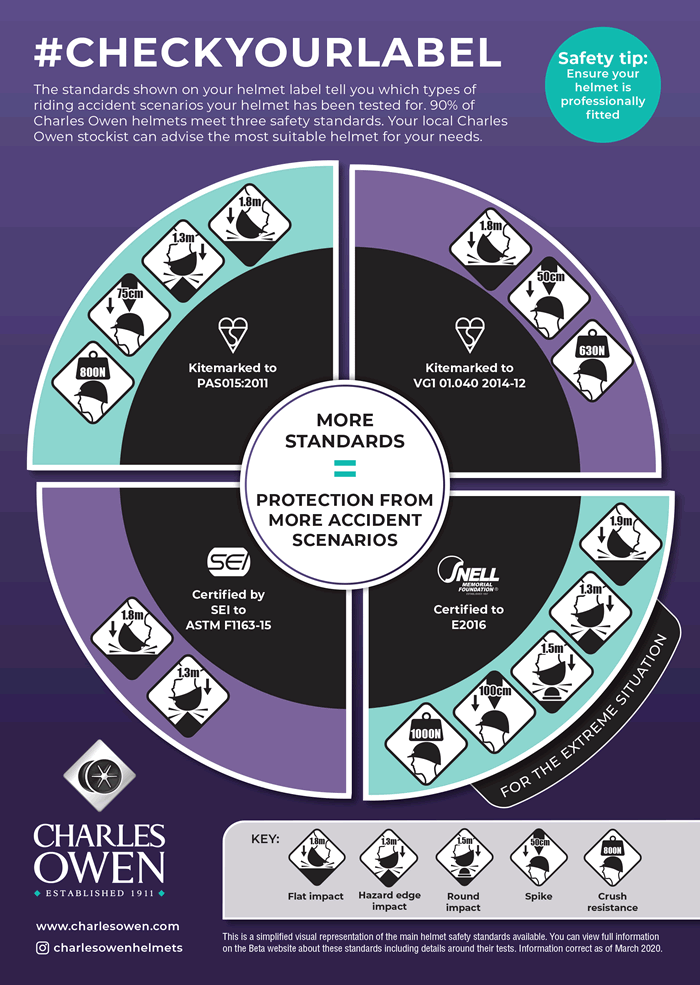
All riding helmets on Equishopper have passed, at a minimum the SEI/ASTM Certification. This certification is given after rigorous testing for protection against the kind of impacts that are sustained specifically when riding a horse, which tend to be high rather than low impact in nature. Our friends at Charles Owen have this great graphic that shows the level of protection that each body certifies for. Depending on the discipline that your ride, some certifications may be more important to you than others. |
|
|
|
|
While some standards look closely at preventing the most severe types of head injuries a rider may experience, others protect from the more commonplace.
No one standard can accurately predict the specific type of accident or fall a rider may experience as there are too many variables to take into account: if the fall is on concrete, grass or in an arena; whether the rider is kicked when he or she falls; whether the horse is wearing studs/caulks; or if a horse falls on the rider, causing a crush injury.
Therefore, a helmet that meets multiple standards has been proven to provide the most comprehensive protection and cover a wider range of the potential accident scenarios a rider might experience.
(Courtesy Charles Owen) . |
 |
The Certifications that you will see inside the helmets of all the major brands that we carry are the primary indicators of the safety level of that particular helmet. Picking a small number of these helmets to rank against one another would be of secondary interest as apposed to putting helmets with more certifications ahead of those with less.
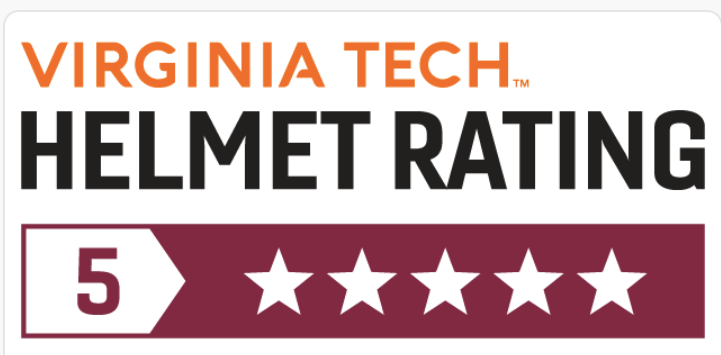
There are thousands of highly certified riding helmets on the market, just a few of which are ever chosen for independent ranking/rating from independent organizations. The first of these here in the United States has been done by Virginia Tech University. Here, they chose 40 helmets to test and then rate, with a higher weighting on low impact blows to the helmets. There has already been discussion about the protection that MIPS technology not being a factor here. Also, that the weighting was so much less for helmets that scored well in high impact scenarios. |
|
|
|
|
"With sponsorship from Jacqueline Mars, USHJA, USEF, USEA, we have rated a total of 40 equestrian helmets using the STAR evaluation system. Our impact tests evaluate a helmet's ability to reduce linear and rotational acceleration of the head from a range of head impacts a rider might experience. Helmets with more stars provide a reduction in concussion risk for these impacts compared to helmets with fewer stars." (Virginia Tech). Click above to go and see all 40 Helmets tested and rated. |
|
|
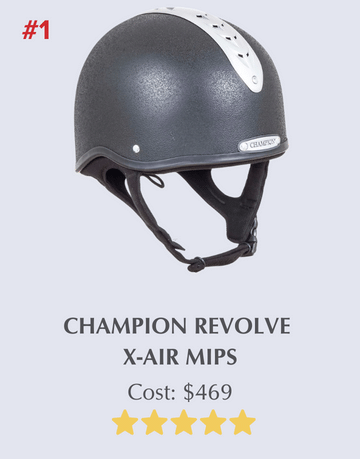
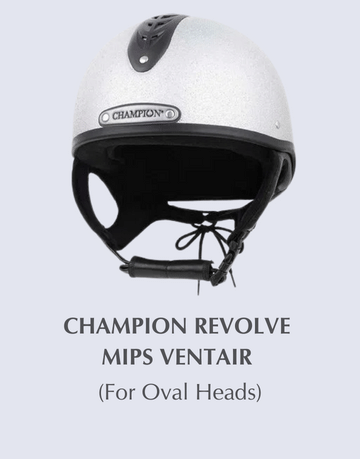
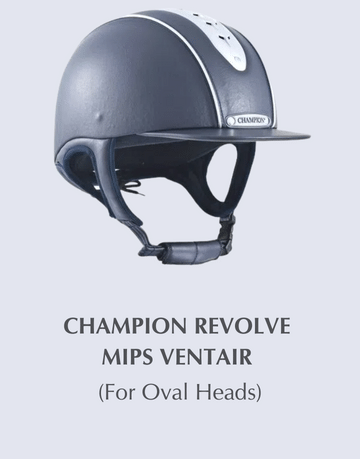
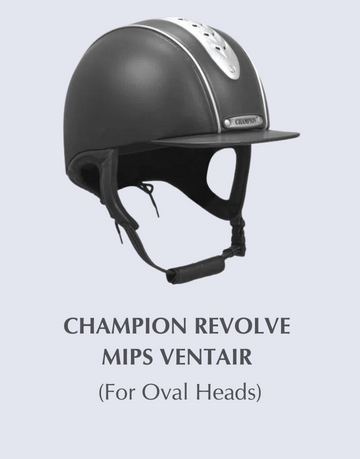
The Champion Revolve X-Air is designed to fit ROUND heads better. The EXACT SAME helmet in an OVAL is the Champion MIPS VENTAIR Helmet. We were asked to show you these styles by the US Distributor for Champion. Fit being the most important thing. So, here they are: |
|
|
|
|
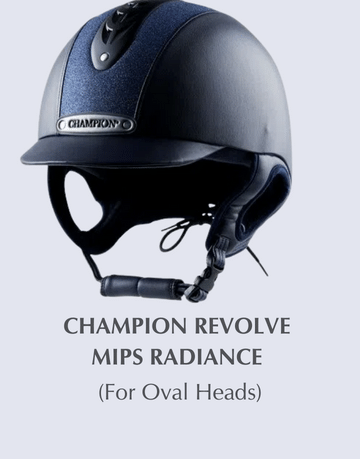
The Champion Revolve MIPS Radiance is the SAME helmet as the Champion MIPS VENTAIR Helmet above - but with Sparkles. We were asked to show you these styles by Toklat, the US Distributor for Champion as some of the sizes/styles are selling out because of the enormous demand for their helmets that the Virginia Tech Report engendered.
We are working with Toklat to allow us to show all the sizes and styles of these helmets. So order what you would like and your order will keep your place in line, should that helmet have sold out. Shipments will start coming in likely by the end of January, so get ahead of the demand in the Spring. |
|
|
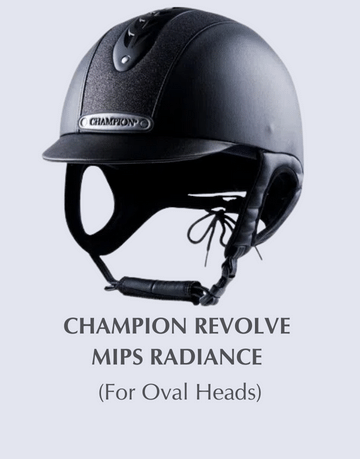 |
Black/Multi Sparkle |
|
|
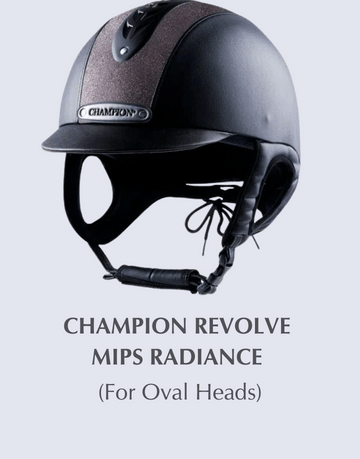 |
Black/Black Sparkle |
|
 |
Navy/Navy Sparkle |
|
|
|
|
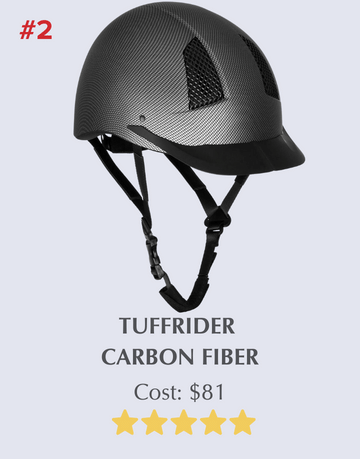
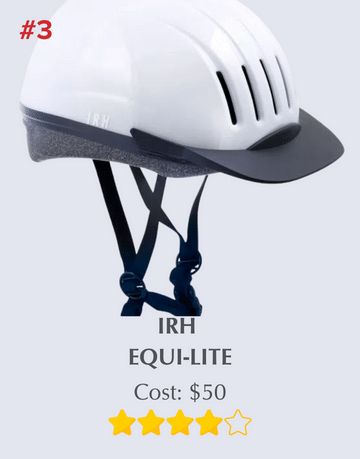
So, why did these two lower price-point helmets score so well we have been asked. The Virginia Tech Ratings weighted for helmets that did well in LOW IMPACT testing. These helmets scored well because their outer shell is softer and therefore absorbs the lower impact well. Helmets with hard shells that are designed to protect against high impact blows, crushing and piercing, did not score as well in this study. |
|
|
|
|
|
|
Analysis of the Virginia Tech Equestrian Helmet Safety Study
At Charles Owen, we welcome any advancement or research study which brings new information
about concussion to the public conscience.
We appreciate these findings in regards to low velocity impacts but want to highlight the potential
issues in basing research methods upon social media videos of accidents. Whilst there is a wealth of
content available, accident and concussion information should ideally be gathered from riders
themselves and medical records to truly understand how concussion was caused.
We are proud to be a major contributor to accident research, having gathered detailed information
about rider accidents for many years with over 1000 case studies to date, this data is used by the
equestrian industry to develop the safety standards to improve helmet safety across the industry.
The main three international safety standards of VG1, PAS:015 and ASTM incorporate low velocity
impacts as seen in this study, as these do play a role in everyday accidents.
However, there are also crucial tests such as spike tests, rotational tests, crush tests and hazard edge
tests that also need to be considered when measuring helmet safety. These tests are peer reviewed
and developed over many years by medical consultants, industry experts and PHD researchers to
replicate major causes of rider head trauma and concussion. This might be a rider landing on their
head, being kicked, hitting a fence or rock, or being rolled on, to name a few.
We encourage all riders to ensure their helmets meet a minimum of three safety standards
(PAS:015, VG1 and ASTM) as this ensures your helmet has been tested against nine different
accident scenarios, as every rider will know, every accident is different in the levels of force, speed
and angle involved.
Whilst this study, focusing on one potential cause of concussion, is useful for consumers to simplify
the science, we also advocate that consumers dig deeper and understand the industry standards
themselves. You can learn more about this here. This video is a good case study as to the importance
of the crush and spike helmet test, seen in the PAS:015 standard. |
|
|
|
|
|
|
And this from OneK Helmets:
Please note that the VA Tech rating system is not a pass/fail system. OneK helmets have passed the safety standards for equestrian helmets set by ASTM F1163-15. Those results are then certified by the Safety Equipment Institute (SEI). They also carry the European standard VG1 certified by CE. It is important to note that the ASTM standard is based upon high impact falls that could result in catastrophic injury. Helmets built to the highest levels of this standard often do not score high on studies that include low impacts. |
|
|
|
|
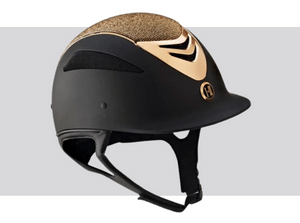 |
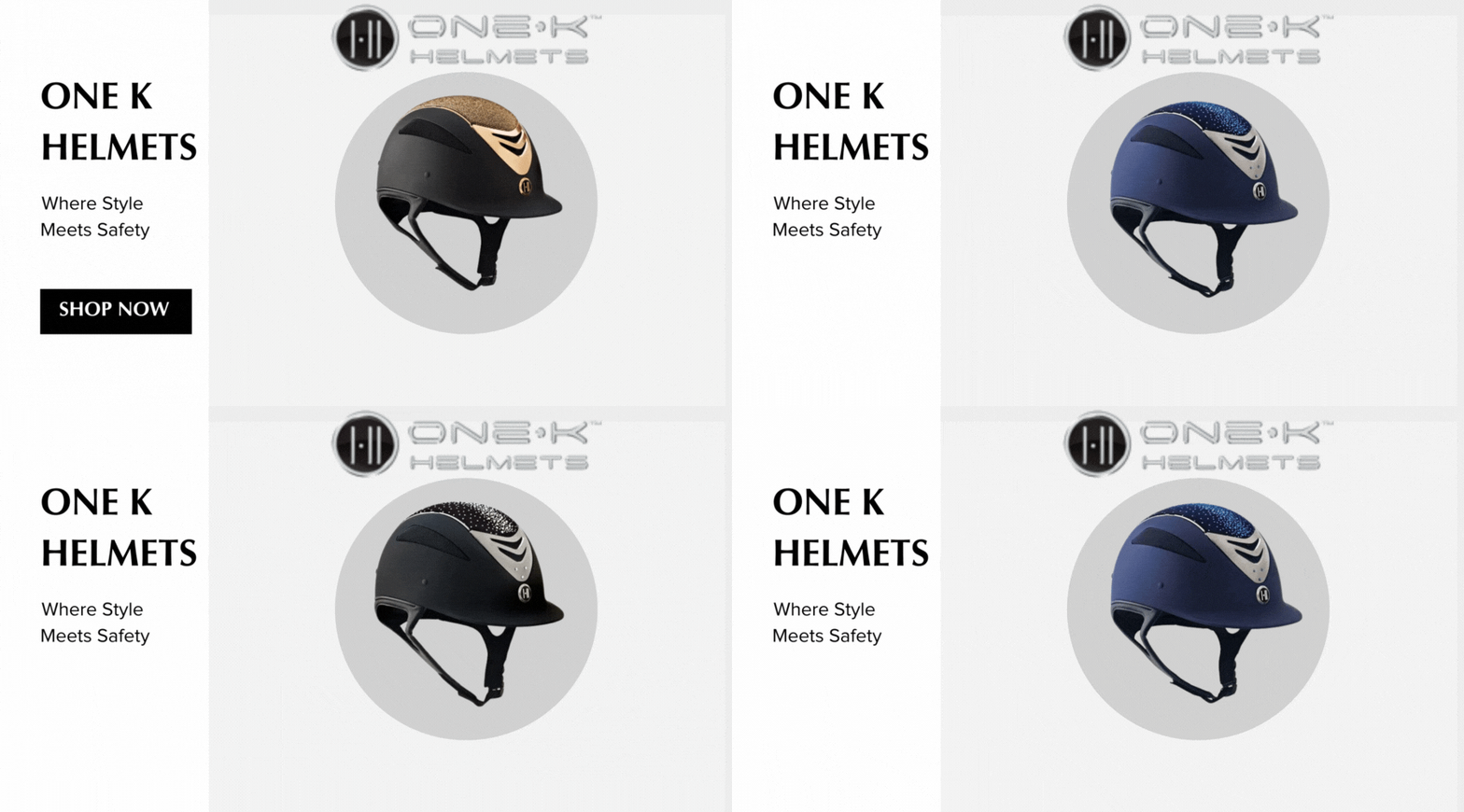
ONE K |
Where Style Meets Safety |
From MIPS technology to wide brimmed helmets for sun protection, junior helmets to a bit of dazzle, One K has it all. |
| SHOP NOW |
|
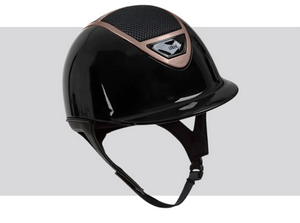 |
IRH |
IRH - a Family Affair |
From Beginner, to Schooling to Show - IRH has you covered. Start and Grow with IRH. |
| SHOP NOW |
|
|
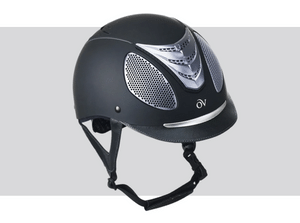 |
OVATION |
Always Amazing |
Explore the full line of Ovation helmets - for schooling and competition use. Ovation always delivers that amazing bit extra! |
| SHOP NOW |
|
 |
CHAMPION |
Built to Perfection |
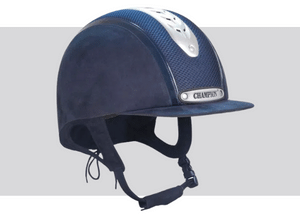
Giving you complete confidence in the fact that all Champion products are built to perfection, tested to destruction… |
| SHOP NOW |
|
|
|
|